Grading That Redirects Water Permanently
Excavating and Dirt Work in Chassell for properties with foundation drainage issues, uneven yard surfaces, and erosion from seasonal runoff
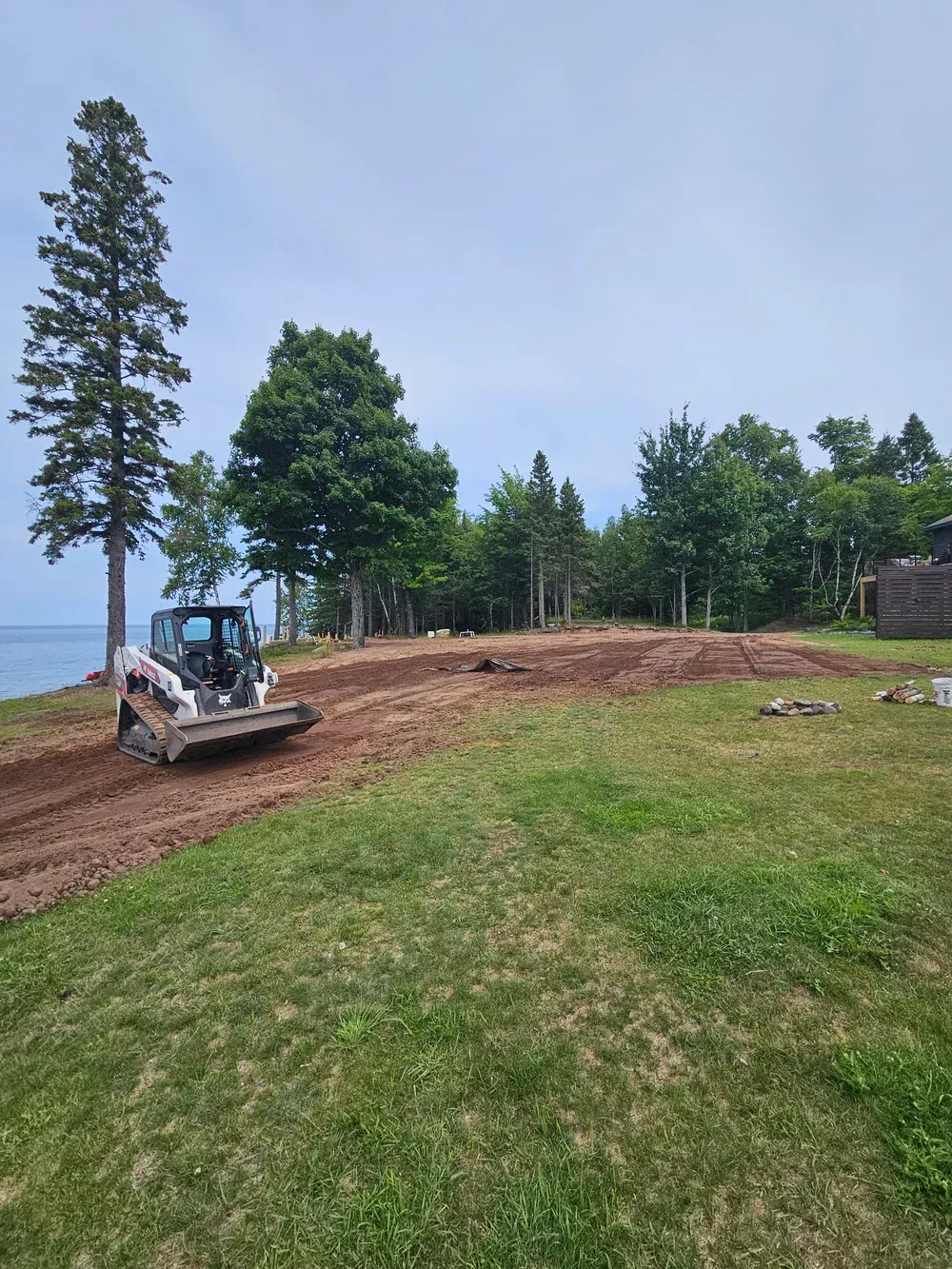
Spring snowmelt and heavy rain events in the Upper Peninsula move large volumes of water across residential lots, creating erosion channels, saturating foundation perimeters, and leaving standing water in low areas where drainage was never established. Grading services reshape yard surfaces to direct runoff away from structures, eliminate depressions where water collects, and establish positive slope that prevents moisture from migrating into basements and crawl spaces. Pace Contracting operates excavation equipment to perform site preparation for construction projects, install gravel access roads and driveways, level yards for landscaping or outbuilding placement, and correct drainage problems that threaten foundations and septic systems.
Proper water management combines surface grading with subsurface solutions like French drains or curtain drains where soil conditions require it, though many drainage issues resolve through strategic regrading that works with natural slope rather than fighting it. Equipment access areas use compacted gravel bases that remain stable under vehicle weight and resist rutting during wet conditions, supporting concrete trucks, material deliveries, and heavy machinery without destroying lawns or creating muddy tracks.
Request a free excavation estimate to evaluate drainage concerns, discuss site preparation needs, and review grading options for your property.
Effective grading establishes minimum slope of two percent away from foundation walls for at least ten feet, preventing water from pooling against basement walls where hydrostatic pressure forces moisture through cracks and joint seams. Yard leveling removes humps and depressions that interrupt drainage flow, using fill material compacted in lifts to prevent settling that recreates the original problem. Erosion control addresses concentrated flow paths where runoff gains velocity, installing erosion fabric or stone riprap at swales and culvert outlets to prevent soil loss during heavy rain.
Once grading work completes, you'll see runoff flowing steadily toward drainage paths during rain instead of pooling near your foundation, previously soggy areas becoming usable yard space that supports foot traffic without sinking, and erosion gullies stabilizing rather than deepening with each storm. Basement walls stay dry through spring thaw when groundwater levels rise, and landscaping thrives in properly drained soil rather than struggling in saturated conditions.
Site preparation for new construction includes clearing vegetation, removing topsoil for stockpiling and later reuse, excavating to required depth for foundations or utility trenches, and establishing rough grade that supports concrete work and framing stages. Driveway preparation involves subgrade compaction, base gravel installation to proper depth and density, and final shaping that sheds water to sides rather than allowing it to run toward garage floors or create ice sheets across the approach.
What Property Owners Usually Ask
Excavation and grading projects raise questions about drainage solutions, material requirements, and how site work integrates with other property improvements across Chassell and surrounding communities.
What causes water to pool near my foundation?
Pooling typically results from settled backfill creating negative slope toward the house, roof runoff discharging too close to walls without extensions, or original construction that never established proper grade away from the foundation perimeter.
How is gravel base thickness determined for driveways?
Base depth depends on soil conditions and expected vehicle loads, typically ranging from four to eight inches of compacted gravel for residential driveways in the Upper Peninsula, with deeper bases required for soft or clay soils.
When should excavation happen during new construction?
Excavation for foundations occurs after site layout but before concrete work begins, while final grading happens after construction completes to establish drainage around the finished building and prepare for landscaping.
What type of fill works best for leveling yards in Chassell?
Clean fill or sandy loam compacts well for structural support while allowing drainage, whereas clay-heavy soils retain water and should be avoided in areas requiring positive drainage or supporting foot traffic.
How does erosion control work at drainage swales?
Erosion control uses geotextile fabric beneath stone riprap to prevent soil migration while allowing water flow, or establishes vegetated channels where grass roots stabilize soil once established.
Pace Contracting provides excavation and dirt work services throughout Chassell, Hancock, Houghton, Calumet, Atlantic Mine, and Twin Lakes to address drainage problems and prepare sites for construction. Contact us to discuss grading solutions specific to your property conditions.